Organizational diagnostics for teams in transition · 25+ years inside the work

Turn recurring pain points into lasting improvements.

Reorgs, mergers, and AI rollouts expose the gaps. Most breakdowns show up in handoffs, ownership, and misaligned expectations.

I’m Richard Lee. I’ve seen this dysfunction across design, engineering, and program management, and I help teams fix it.

Ways we can work together

Engagements shaped around your specific challenge. Not a fixed one-size-fits-all package.

If you're a VP or Director watching capable people underperform in a broken system, this is where to start. Most of what I do starts with a diagnostic. Not because it's a product I'm selling, but because walking in with a solution before I understand the situation is how consultants make expensive mistakes on your dime. Here's how engagements typically take shape:

01 The flagship engagement

Organizational Diagnostic

Four weeks. Structured discovery across your leadership team, your functional leads, and the people doing the work. At the end, you have something most organizations don't: an honest picture of what's actually happening, why it's happening, and what to do about it. Directly from someone without a political stake in the answer.

The deliverable has three parts:

  1. A before-and-after view of the situation: how it looked from outside before I arrived, and what I found once I was inside.
  2. A root-cause analysis connecting your specific challenges to their actual sources.
  3. A set of recommendations spanning staffing, process, training, and operating model changes, each tied directly to the problem it addresses, with what you can expect (and monitor) once you fix it.

I build in a midpoint check-in. If what I'm finding suggests the scope needs to expand, we make that decision together, and do so explicitly, with a clear rationale rather than by default.

Starting at $15k · Contact for more details on flagship engagement.

Travel, when required, is billed at cost and invoiced separately.
02

Fractional Product & UX Leadership

Drop-in leadership for your design and product function. Full attention on the problems that matter, without the overhead of a full-time hire or the ramp time of a permanent search. Useful when you're between leaders, scaling faster than your org chart, or carrying a critical function on someone who's already stretched.

Contact for details on monthly retainer pricing · Minimum 3-month engagement.

03

Operating Model & Team Design

Who owns what. How decisions get made. Why capable people keep working against each other instead of together. I help you redesign the structure, the interfaces between teams, and the expectations that have to be explicit for any of it to work.

Contact for details on fixed project pricing · Scoped per engagement. The diagnostic often precedes and informs this work.

04

AI Adoption & Workflow Design

Not an AI strategy deck. Actual workflow redesign that starts with identifying where AI tools create genuine leverage in your organization, then building the governance and enablement infrastructure that makes adoption stick, and rolling it out so your team can sustain after I'm gone. I've shipped production LLM-based systems inside real organizations, and know where the gap between "we have AI tools" and "AI tools changed how we work" actually lives.

Contact for details on fixed project pricing · Engagements including tool build & ship command a premium.

05

Research & Discovery

Finding out what's actually true before you spend a quarter building on a guess. Structured listening programs, usability research, virtual/traditional Gemba, etc. the methods vary, the goal doesn't: get to ground truth faster than you would on your own.

Contact for details on daily rate · Larger programs scoped with fixed project pricing.

I'm selective about engagements because the work requires genuine immersion. If we talk and I'm not the right match for what you're facing, I'll tell you that, and do my best to point you toward more fitting resources.

The method

A framework, not an opinion

01

Detect patterns

Surface the recurring signals: the decisions that keep reversing, the work that keeps getting dropped, the friction that everyone notices but no one names.

02

Locate breakdowns

Trace each signal back to its structural source: a gap in ownership, a broken handoff protocol, a misaligned incentive, or an untested leadership assumption.

03

Fix the system

Design targeted changes at the system level: not workarounds, not training, not new tools, but structural fixes that hold without heroic effort.

Core beliefs

A few principles I don't compromise on.

Listen before diagnosing

The presenting problem is rarely the only problem or the core issue. I spend the first part of every engagement in listening mode. That's not to validate what leadership already believes, but to hear what isn't being said, both in the rooms where leadership sits, and on the ground where leadership doesn't spend their time.

Trace causation, not symptoms

A team that keeps missing deadlines isn't usually a team problem. A product that keeps getting redesigned typically isn't a design problem. I follow the thread backward until I find what's actually generating the dysfunction. That is what needs focus. That's what must be addressed.

Evidence over opinion

Strong opinions about organizations are cheap. I'd rather go find out. Every recommendation I make ties directly to something I observed, heard consistently, or measured. I'll show you the connection.

Leave it stronger

I'm not building a dependency. The measure of a good engagement is whether the team runs better after I'm gone, rather than ensuring they need me to stay.

How do my convictions show up?

Rich has a terrific combination of professional qualities: he's deeply thoughtful and energetically creative. He can keep the "big picture" in mind while still handling the smallest detail. His background and skills in UX, Design, and PM mean he'll join a business, learn it quickly, and make a difference right away. I've seen this firsthand. Highly recommend.
Nicholas McCracken Director of Strategic Insights & Foresight · Worked alongside Richard in the Ford Pro group

What it looks like on both sides

Dysfunction Signals

  • Decisions reversed after rollout
  • Unclear who owns what across teams
  • Teams misaligned on shared priorities
  • Handoffs consistently drop work
  • Initiatives stall before completion
  • Leadership assumptions never tested

After the Engagement

  • Decisions made closer to the work
  • Ownership is named, accepted, and held
  • Teams share a working operating model
  • Handoffs have clear protocols and owners
  • Initiatives reach a defined finish line
  • Leadership blind spots surfaced early

Diagnostic approach

From visible symptoms to structural root causes

Most interventions target symptoms: a new tool, a training, a restructure. The dysfunction returns because the structure that produced it hasn't changed. The work is to follow the trail from what you observe to what actually enables it.

  1. 01 Surface the signal : something keeps breaking
  2. 02 Name the pattern : it has happened before
  3. 03 Trace the structure : what enables this?
  4. 04 Find the root : ownership, incentive, process
  5. 05 Design the fix : structural, not a workaround

Recurring problem areas

  • Handoffs

    Work dropped between teams

  • Ownership

    Unclear who decides and holds

  • Alignment

    Teams pursuing different goals

  • Decision Flow

    Approvals that stall progress

  • Rollout Risk

    Initiatives that reverse after launch

Where issues hide

The problem is usually not where you're looking

Issues most often live at the boundaries: between functions, across team handoffs, and inside leadership assumptions that no one has tested.

  • Leadership assumptions

    Untested beliefs about how work actually flows

  • Between functions

    Where ownership ends and accountability gaps begin

  • Across teams

    Handoffs that look complete but aren't

Case studies

Structural fixes in practice

Product & Engineering

A 90-day launch cycle kept slipping to 180

HandoffsDecision Flow

Challenge

Every sprint plan looked clean. By week six, the same three escalations appeared. The bottleneck wasn't execution. It was a broken handoff protocol between product and QA that no one owned.

Outcome

Defined a joint acceptance protocol with two named owners. The next two cycles shipped on day 87 and day 84.

Cross-Functional Leadership

Three teams, three roadmaps, zero coordination

AlignmentOwnership

Challenge

The heads of sales, marketing, and product all had plausible plans. None of them were built from the same assumptions about the customer. Alignment workshops hadn't helped.

Outcome

Surfaced the divergent assumptions in a single structured session. Built a shared model the teams could argue with, and then didn't need to.

Scaling Operations

A new process kept reverting to the old one

Rollout RiskOwnership

Challenge

Six months after a major ops redesign, the team was working around half the new process. The rollout had been thorough. The training had been clear. The incentives hadn't changed.

Outcome

Restructured the incentive alignment and named transition owners at every tier. The process held past the six-month mark for the first time.


Selected experience

The same pattern, across 25+ years and a lot of different rooms.

I haven't spent my career as a consultant. I've spent it inside organizations in different roles: as the designer, the engineering manager, and the program director. That's not a liability, that's the whole point.

Ford Motor Company

Director of Program Management, Ford Pro

2024 – 2026

Arrived to a globally distributed organization across four teams and two continents with no alignment on intake system, no prioritization framework, no shared visibility across the org. Teams were self-managing and nobody had the full picture.

I built out my team and we built up the practice from the ground floor: intake, prioritization, governance, delivery standards, cross-functional coordination models, and reporting cadences. Then I built the tooling to make it sustainable, including four production LLM-based systems to replace manual reporting cycles, to model organizational knowledge transfer during a complex team pivot, to surface patterns in distributed team communications, and to manage AI-assisted content workflows across geographies.

These weren't experiments. They were production-ready, built to change how the organization operated.

$250M+ in budget and vendor management across NA and EU.

Siemens Healthcare Molecular Imaging

UX Lead

2015 – 2019

Walked into an engineering-led organization across three continents where design culture had to be established rather than inherited. Built the SHUI design system from scratch as part of SHUI core team, established shared research methodology standards, and ran compliance-grade usability testing programs in four countries, supporting FDA and international regulatory submissions.

Built and ran the Molecular Imaging Internship Program, because sustainable design practice means growing the next layer of practitioners, not just doing the work yourself.

The listening tour approach I use in diagnostics today was already running here: understanding what engineers and clinicians actually needed, tracing the friction backward to its sources, and recommending changes that the org could own after I left.

Supported Legacy PET/CT, Modern PET/CT, modern and next generation SPECT/CT scanner systems, as well as diagnostic software applications in Oncology, Cardiology, Neurology, and General Reading

Scripps Networks Interactive

Front End Engineering Manager & Ad Operations Manager

2007 – 2014

Two distinct roles, one consistent pattern. In Ad Operations, I inherited a team and a set of processes that had been outpaced by growth. I ran a listening tour across ad ops and ad sales to surface what was breaking and why, then traced the causes backward through workflow, tooling, and coordination gaps. The fixes were concrete: internal tools that cut manual error and automated the repetitive work, cross-departmental standards that tied ad technology to SNI policy and process, and training modules and partner-onboarding infrastructure that let new hires and new site partners come up to speed without dragging on the team.

As Front End Engineering Manager, I led development and production teams across the Food and Shelter category (FoodNetwork.com, HGTV.com, DIYNetwork.com, Food.com, and others), driving year-over-year gains in engagement and revenue. I pioneered agile workflows that raised quality, reduced rework, and gave stakeholders far better transparency; reshaped intake, career development, and soft-skills coaching to lift retention and morale; and represented front-end development in a company-wide effort to standardize engineering practice across teams that had each grown their own way.

The instinct that drives the diagnostic work was already fully formed here: listen, trace, surface, fix.

11 brand-site launches and integrations across the SNI portfolio · ~30% gain in ad-ops efficiency · team grown 120%.

The Predictive Index

Senior UX Designer

2021 – 2023

HR tech, which means the product was the organizational intelligence layer. Design decisions led to reduced support costs, increased sales conversions, and significant contract renewals. The specificity of those numbers reflects a discipline I bring to every engagement: if you can't measure it, you're guessing.

32% reduction in support tickets, a 5% increase in sales conversion and $1.8M in contract renewals,

SPC Press

Web & Production Consulting

Production and web design work for Dr. Donald J. Wheeler's companies: SPC Press & Statistical Process Controls, Inc. Included production of the extensive "Understanding Statistical Process Control" seminar series (YouTube) and spcpress.com.

Statistical process control is, at its core, a methodology for distinguishing signal from noise in complex systems. Spending time in that world sharpened something I was already doing instinctively.

In transparency: Ford, Siemens, Scripps, and The Predictive Index were full-time leadership roles rather than traditional consulting engagements. What they represent is decades of doing this work from the inside, at scale, in organizations where the stakes were real. Leeway is where I make that experience available to organizations that need it without the costs and commitment of a full-time hire.

What people say

He came to our team as a Director over Program Management — shepherding work across nearly 150 individuals, building a new system for the commercial business at Ford Pro, and moving pieces across a complex, very old organization through digital transformation. Any organization that could count Rich in their ranks would be a step ahead of others in their competitive sphere.
Christian Manzella Executive Leadership in Marketing, Product & Design · Managed Richard directly at Ford
I highly recommend Rich as a powerhouse program manager and process creator. Having worked together at Ford, I saw his ability to immediately bring structure, clarity, and execution strategy. He is a strong fit for companies with mature systems that require a sophisticated skillset to optimize operations and drive large-scale initiatives forward.
Heather Johnston CX Leader, Strategist, Builder of High-Performing Teams · Worked alongside Richard at Ford
One thing I consistently saw was his genuine effort to support the people on his team. He played a key role in shaping the structure of our program management function — clarifying roles and bringing thoughtful consideration to how the team should grow. A steady advocate for the function, his consistency and focus contributed meaningfully to how it evolved.
Echo Alexander Senior Program Manager, Ford Pro · Reported directly to Richard at Ford
His deep experience in design, UX, and product operations complemented his exceptional ability to streamline complex workflows and enhance productivity. What really sets Richard apart is his positive, forward-thinking attitude — that, plus his experience managing complex, evolving projects, would make him an invaluable asset to any organization.
Kathryn Schifferle Founder & CEO, Work Truck Solutions · Partnered with Richard's team at Ford Pro
Because of his deep expertise in UX and large-project experience, he delivers practical solutions — and easily expands a perspective to see the bigger picture in terms of enterprise design and improving the lives of healthcare professionals and patients. Richard is particularly competent at finding trade-offs between the interests of individual parties and cross-portfolio strategies in organizations.
Christoph Braun Innovation & Strategy Advisor · Ex-Siemens · Worked alongside Richard at Siemens Healthcare
Rich is a talented UX professional who guided the company in thinking through usability and human factors while developing products. He spent a good deal of time bringing global internal talent up to speed on the latest UX and HF thinking, and his contributions made harmonizing the user experience across our newest product lines easier.
Davis Soans Staff Systems Engineer, Siemens Healthcare · Worked alongside Richard at Siemens Healthcare
Show 7 more recommendations
Richard is a very gifted and experienced designer. He is very clear and thorough in his articulation of design decisions, and I've always been impressed by his sharp eye for detail — both in usability and aesthetics. I highly recommend Richard as an outstanding UX Designer and a very pleasant colleague.
Annika Engelhardt UX Designer · Worked alongside Richard at Siemens Healthineers
I worked with Rich for seven years, each of us in a variety of roles. Rich always challenged me, and his recommendations were well researched and thought out. He has a rare passion for constant learning and improvement — always a new book in his hands or an article to tell you about. I look forward to the day when I can work with Rich again.
Tripp Shewmake Engineering Director, Brightspot · Worked alongside Richard at Scripps Networks
Rich was my manager when I interned in the Front End Engineering department at Scripps Networks Interactive. He provided the direction and guidance I needed to quickly learn the role and how to interact with other departments — in such an amiable fashion that I felt I was collaborating with an old friend rather than an unfamiliar boss. I would recommend Rich for any managerial position, technical or non-technical, without hesitation.
Cory Thorpe AI / ML Design @ DigitalOcean · Reported to Richard at Scripps Networks
Rich has an astonishing ability to provide clarity and unification where there seemingly is none. His designs and workflows are clear, consistent, and visionary. Hire him and problems you didn't even know you had will melt away.
Wihan Nel Senior Software Engineer · Worked with Richard at The Predictive Index
Rich's ability to ask the right questions and analyze user feedback was invaluable in shaping our products into successful and impactful solutions. His designs were consistently visually appealing but also highly intuitive and user-friendly. I wholeheartedly recommend Rich.
Dave Berke Product Manager · Worked with Richard at The Predictive Index
I could count on Rich. He was always willing to help — whether I needed someone to proofread a recruiting email, troubleshoot ResearchOps software, or jump in at the last minute to observe a session. I'm still working to fill the void since Rich's departure. I would work with him again and welcome his continued support.
Jessica Ivins Lead UX Researcher, Strategist & Facilitator · Was senior to Richard at The Predictive Index
Rich was an absolute pleasure to work with. Friendly and professional, he was an excellent thought partner in solving real customer problems and developing innovative solutions.
Sarah Mulvey Lead Product Manager · Worked with Richard on the same team at The Predictive Index
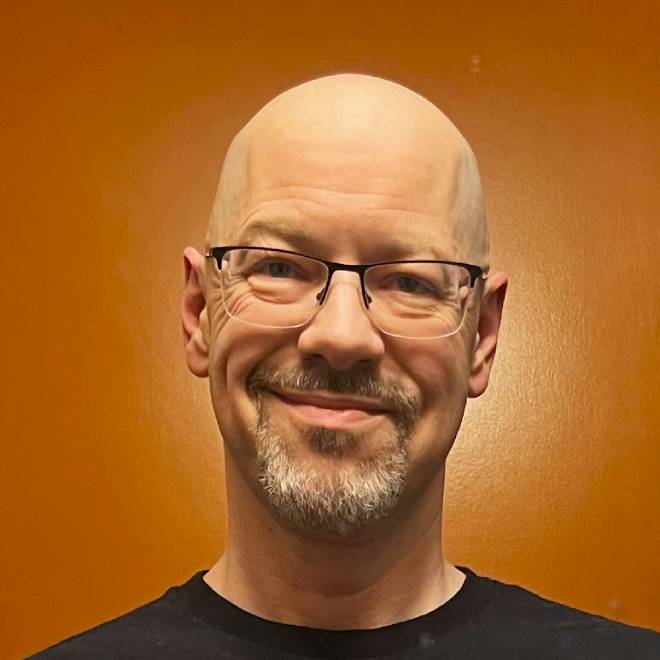
Portrait of Richard Lee

About Richard

I'm Richard Lee. I've been building things on the internet since 1996. At first it was just little interactive projects and brochure websites + brand work for small businesses, then gradually that became software products and digital platforms for larger and more complex organizations. The work kept getting bigger, but the instinct persisted and my approach grew sharper. What makes my background unusual isn't the breadth of it. It's the sequence and the sum.

I've held the roles, not just led people doing the work. When I sit down with a design team that's struggling to coordinate work with engineering, I'm not reasoning from theory. I'm reasoning from memory.

The work I do now in organizational diagnostics, operating model design and AI adoption is the natural extension of a pattern I've been running since my first management role at Scripps in 2007: listen to the people doing the work, trace the friction backward to its actual source, and recommend changes that the organization can monitor and sustain after I leave. Siemens and Ford was where that ran at global scale. Leeway is where it becomes available to organizations that need it.

I'm based in Knoxville, Tennessee, and work with organizations nationally. Most of the discovery work translates well to remote execution, as structured listening sessions, video conversations, and async conversations can surface more than people expect when the process is deliberate.

But some organizations are inseparable from their physical context. A hospital where the staff culture lives on the floor. A manufacturing operation where the dysfunction is visible the moment you walk the line. A headquarters city where being in the room for a week tells you things that six months of Zoom calls wouldn't. When that's the situation, I'll tell you, and I'll come to you. Travel is billed at cost, separate from the engagement fee, and I won't recommend it unless the context genuinely calls for it.

Let's talk

When something here sounds familiar, that's worth a conversation.

Not sure I'm the right fit? Tell me what you're facing and I'll be straight with you. If someone else, or an outfit with more horsepower is better positioned to help, I'll say so.